It is the time of year that we should be ordering our broiler chickens. I have to be honest here-my heart does not seem to be into raising these chickens. Oh we're going to do it, but I, kinda, don't want to. I think I'm getting lazy in my old age.
Joking aside, what really has me bumfuzled is the cost of feed. We sell many of the birds, keeping enough for ourselves, but it is getting harder to turn a profit. We buy a ton of feed at a time, supplemented with grass in chicken tractors. Last year, when I went to buy feed it cost $400 for a ton. It's still cheaper using our custom mix than buying Purina junk, so it worked out, but I haven't checked on the price of things yet-so I'm dreading it.
In the end, I need to quit lollygagging and get the order in for the birds. No matter what, they are still the best tasting, best for you chickens around.
We are a family with a small homestead in the Ozarks. Our desire is to search out the Truth in a quest for a Biblical world view, which is looking at the world through the eyes of God, seeing it as He sees it-lost. Information presented here is left to the reader to decide any action to be taken, but we do strongly encourage those who read here to pray fervently.
Showing posts with label pastured chicken. Show all posts
Tuesday, February 19, 2013
Saturday, July 9, 2011
Update
Brother, it's hot! 'Tis summer, I guess. The ground is parched and so are we.
I am working on a chicken coop made with cattle panels hooped up on a frame. i will try to remember to post pictures of the completed project. I have some friends and relatives that use these and I am impressed with the durability of them. Some have hung rabbit hutches in them, others have put egg boxes in them. They all use hanging waterers and feeders. I didn't like them at first, I thought they would act like a parachute in the wind and we get some stiff winds here. Typically, they are covered with tarps, so I thought the wind would get under them and carry it away. Our one friend leaves enough of the panels open that the wind passes through and she has not had a problem-yet. But, I am warming up to this style of coop and may use this design for other things-who knows?
Other than temps that could bake a potato, that's all I have going on right now. I still have my laundry list of tasks, but I am sure I always will. I am going to await a little cooler weather.
Wednesday, May 18, 2011
Feathers For Oil?
Scientists have discovered a way for chicken feathers to be substituted for petroleum in the making of plastics. This could greatly reduce the US dependency on foreign oil, that could be a good thing. Maybe all us chicken farmers should start saving and selling the feathers at butcher time? Read more...
Monday, November 15, 2010
New Study Proves The Health Benefits Of Grass Fed Animals
Once again, science has determined that eating grass fed beef and dairy products is actually healthy for you. This is what God has been saying all along, you see cows were meant to eat grass that is the way they are designed. It is an unnatural state for them to be in a confined area being fed GMO grain. Now we have even more scientific proof that God's design is perfect. You might want to keep this article to use for reference when answering question for your customers.
Saturday, November 6, 2010
Birds, The Natural Pesticide
This is a great article about an important natural pesticide that was common not too long ago. Birds are a great tick and fly killer, and one of the most wonderful sights in the world is to see birds in the pasture right next to the cattle. God created things in a perfect way with a specific purpose, yet mankind always seems to think he has a better way than God's. The attached article shows an example of farmers in Africa that have seen the light, as it were, and have moved back to nature as it should be. Although the story is in Africa, I think there is a lesson for all of us homestead types that want to escape the use of chemicals and raise our own food in a healthy, natural, wonderful, happy way. How do you think this article can benefit you and your homestead?
Saturday, May 1, 2010
Pasture Crawling?
If you follow rotational grazing, or, mangement intensive grazing, you know that pasture walking is an important aspect of your management. It is important to get a look and feel of the condition of your pastures, to see bald spots or other damage that needs repair. Or to find holes that might need filled. Most importantly, you can get a feel for the condition of the soil, based on the life on the surface. We have been working on this soil, here, for several years now.
Today, I did a pasture crawl. Yup, you heard me right, I got down on my hands and knees and crawled around on the ground. No, my eye sight isn't so bad, yet, but I did want a closer look at some legumes and I just stayed down there.
I am excited as we have legumes, clover and Korean Lespedeza, growing, voluntarily, in our pastures. These two legumes are spotty, but there none the less. This is good news. Legumes are nitrogen fixers. They capture the N in the air and transfer it to the soil, which makes for healthier grass. Grass need N to grow at all.
This is something that I have not been very pro-active about planting. Not because I didn't want to, but, because I just haven't, for what ever reason. I did throw down some seed a few years ago, but never saw anything from it. I grazed it way too soon after soing that it was probably eaten before it got established.
I have written before about inadvertant planting, and I think this is how the clover and lespedeza got there. When I feed hay, I scatter it in different places, trying not to feed in the same place twice. There are seed in the hay and the cows, with their magnificent hooves, plant the seed for me. It is quite wonderful to watch God's creation do what it is supposed to do.
While down on my knees, I tried a clover leaf. The first taste seemed good, but then there was the after taste. I'm glad cows like it, I didn't think too highly of it. I will stick to eating it in the form of meat and milk. It tastes much better that way.
Leave some comments sharing what you discover on your pasture walks, or, crawls, as it were.
Monday, April 26, 2010
So I was looking around for a hanging feeder for the chicken tractors. I need three of them. I looked at all the typical poultry supply companies and found plenty to choose from. I ended up buying one from the local feed store and found that it is a piece of junk, the worst $15 dollars I've spent in a long time. I got a bit discouraged. The prices on hanging feeders of good quality are outrageous. But, thank God for the internet. My wife did a search and found a neat hanging feeder made out of a bucket. So, I thought I 'd share it with you. I made two of them this evening and will make the third tomorrow, after I purchase acouple of nuts, bolts and washers. They only took about 15 minutes to make and went really fast after I figured out just how I wanted it done. I haven't taken a picture of the ones I made, but have a picture of the one I copied from the internet. To read more about it, click here.
Saturday, April 24, 2010
Chicken Tractor Additions Going Slowly
Yesterday, I learned the importance of setting the corner posts on the fence-good and tight. I have a few "leaners" that I , apparently, didn't get the dirt packed tight enough around. You know how it is, you dig the hole, among many, and you are ready to get on with it. You stick the post in the ground, kick the dirt back in, pack it down and move on. The key, or lesson, here is to make sure the dirt gets packed tight. Trust me, fixing a leaner on a corner brace is hard with the fence all in place. Take the time and do it right. Learn from me, the world's biggest knucklehead.
On another note, the broilers are in week two in the brooder and are very ready to come out. I am working on a set of waterers for the chicken tractors and keep getting waylayed by other things. Today was the weather. There have been intermittent showers and storms, most of the day. It goes like this:
Take all my tools out, cut a couple of pieces of wood.
Gather all the tools up, disconnect the electric fence (lightning protection), head to the house.
Take out all the tools, fasten a couple of boards with screws, cut one more piece of wood.
Gather all the tools, head to the house.
Take out tools and finish the first project.
Gather all the tools and head to the house.
Go out side, look for scrap lumber for the next project, get wet.
Head to the house.
Go outside and begin making necessary repairs to the chicken tractors because I don't feel like taking all the tools out again. Hearing thunder after two screws and a couple of zip ties.
Head to the house, severe thunderstorm warning.
Storm passes in 30 minutes, go back outside.
Now I am tired of the whole thing and just do my regular chores.
The sun is now shinning and I am sitting here at the computer, go figure.
In between all of that we ate lunch. I did manage to get one of the watering stands done, nothing facy but it will work. I will take some pictures to show what I am talking about.
I wanted the chicks out on grass today, but I think I will wait until the weather gets a bit better. Tomorrow might be a good time to do it, after church.
The chicks are past due as we tend to get them out on grass in about a week and a half. They will be fine, for now, but the sooner we get them out the better. After all, as I've said many times before, grass is the key, not only for the birds but for us. All those Omega 3's come from the grass.
As an update on the cows my partner and I were going to buy, we decided that now is not the time. Neither of us are ready for them, fence wise, and we cannot find a place to lease. So, we will wait a bit. My mom still needs to sell her dexters, if you know anyone that might be interested, let me know.
On the one hand, I am relieved that we are not getting the cows. There was a lot of stress trying to find a place to put them in a short period of time. On the other hand, the plans of grass finished beef have been put on hold, and that makes me bummed. We have to wait on God and it just wasn't His time.
I am now looking into plans for a home made trailer for the garden tractor. I have been looking on the internet but haven't come up with what I am looking for. Let me know if you have any ideas.
That's what's happening here. I'm sorry it's not very informative. We haven't really done much that is new, just trying to get good at what we are doing. I hate to add new segments to our homestead income without it fitting into the already existing things we do. We don't want to add labor, but to compliment what we already do. For now, we want to be the best at pastured poultry and meat rabbits and eggs that we can be. All the while providing good food for ourselves, first, then our neighbors and prepare for the comming melt down of the USA.
Keep in touch and thanks for stopping by.
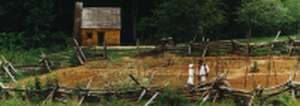
On another note, the broilers are in week two in the brooder and are very ready to come out. I am working on a set of waterers for the chicken tractors and keep getting waylayed by other things. Today was the weather. There have been intermittent showers and storms, most of the day. It goes like this:
Take all my tools out, cut a couple of pieces of wood.
Gather all the tools up, disconnect the electric fence (lightning protection), head to the house.
Take out all the tools, fasten a couple of boards with screws, cut one more piece of wood.
Gather all the tools, head to the house.
Take out tools and finish the first project.
Gather all the tools and head to the house.
Go out side, look for scrap lumber for the next project, get wet.
Head to the house.
Go outside and begin making necessary repairs to the chicken tractors because I don't feel like taking all the tools out again. Hearing thunder after two screws and a couple of zip ties.
Head to the house, severe thunderstorm warning.
Storm passes in 30 minutes, go back outside.
Now I am tired of the whole thing and just do my regular chores.
The sun is now shinning and I am sitting here at the computer, go figure.
In between all of that we ate lunch. I did manage to get one of the watering stands done, nothing facy but it will work. I will take some pictures to show what I am talking about.
I wanted the chicks out on grass today, but I think I will wait until the weather gets a bit better. Tomorrow might be a good time to do it, after church.
The chicks are past due as we tend to get them out on grass in about a week and a half. They will be fine, for now, but the sooner we get them out the better. After all, as I've said many times before, grass is the key, not only for the birds but for us. All those Omega 3's come from the grass.
As an update on the cows my partner and I were going to buy, we decided that now is not the time. Neither of us are ready for them, fence wise, and we cannot find a place to lease. So, we will wait a bit. My mom still needs to sell her dexters, if you know anyone that might be interested, let me know.
On the one hand, I am relieved that we are not getting the cows. There was a lot of stress trying to find a place to put them in a short period of time. On the other hand, the plans of grass finished beef have been put on hold, and that makes me bummed. We have to wait on God and it just wasn't His time.
I am now looking into plans for a home made trailer for the garden tractor. I have been looking on the internet but haven't come up with what I am looking for. Let me know if you have any ideas.
That's what's happening here. I'm sorry it's not very informative. We haven't really done much that is new, just trying to get good at what we are doing. I hate to add new segments to our homestead income without it fitting into the already existing things we do. We don't want to add labor, but to compliment what we already do. For now, we want to be the best at pastured poultry and meat rabbits and eggs that we can be. All the while providing good food for ourselves, first, then our neighbors and prepare for the comming melt down of the USA.
Keep in touch and thanks for stopping by.
Saturday, April 17, 2010
A Long Week On The Homestead
This has been an icredibly long week. I apologizr for the lack of new material here, but, well, you know how it is on a homestead.
Some big weight has been taken off my shoulders. For the first time since we started homesteading, 12 years ago, I have next winter's fire wood supply put up. Yes, this is a first. I can't stress the importance of this. Putting up your winter's wood well in advance of the season, is not only a load off your mind, but smart. Freshly cut wood needs several months to cure (dry). If you cut a green tree, it will need a year to cure. Double that if you don't split it. Trust me, I have taken storm damaged, fallen trees, that have been down for a year and still had trouble burning it because it was still very moist on the inside. Here's a tip, if you cut green wood, take the time to split it. Do this at least a year in advance of the burning season. On downed trees split it 6-8 months in advance. For dead fall, you should split it a couple of months in advance, depending on how long it had been down. Now I can go into winter knowing that I do not have to scape the bottom of the barrel for fire wood. I will not have to feel rushed to cut more and anything I do cut, from here on out, is for the next winter. This is a good feeling.
Another thing that happened this week is that we bought a garden/yard tractor. We bought it used but in great working condition at a very reasonable price. It is 20 horses of power and big enough to do some pulling with a 46" cut. I had been cutting quite a bit of land with a push mower that took me, on average, three hours with another 1.5 hours for trimming. With this new machine, I cut the same grass in 45 minutes. It still takes me an hour, or so, to do the trimming, but what a time saver!
Then there are the animals. My partner and I are looking to bring in some new cattle. We are going to purchase two Dexter cows (pregnant) and one bull (for the butcher). We are struggling with where to put them as my land is not enough and his is not fenced. I have the use of some land but, it too, needs fence. Other circumstances prevent me from placing them on the in-law's land, so we are contemplating a lease of a few acres, until we can get some fence done. But, these animals will give us a head start on some plans we have for beef. We are excited and nervous at the same time. God will work it out, I'm sure.
This, on top of my full time job has kept me away from the computer. That is not all bad. I have a big week ahead of me, as well. I have a couple of shop jobs (sharpening) i have to get done to begin the week. Then there are some repairs that need to be made on the chicken tractors along with additions to them. Ugh!
Tell me what is going on on your homestead, I want to hear from you. Thanks for stopping by!
Saturday, April 3, 2010
Saturday,Work Day
Big plans today for me. I am going to be alone, here, on the homestead. The family is heading off to the flea market to sell some eggs and other things. So, I will be left to my self to stay busy.
As anyone who woks a full time job and is building a homestead knows, the day off is hardly a day off. I have much to do. We have broiler chicks scheduled to arrived this coming tuesday. So, I have to get the brooder ready for them. I am also in need of making repairs to the chicken tractors, all minor, but the y need some fixin'. I am also in the process of setting them up for hanging waterers and feeders. We have done it the old fashioned way for all these years. I am making a platform, attatched to the tractor to hold a five gallon bucket of water, gravity fed to the waterer.
Then, I have some grass trimming to do. This is the only thing I do not like about spring/summer. I cut a lot of grass with a pushmower. I am in the market for a rider, by the way.
Who knows what I will find to do today, but I am sure I will stay busy.
Monday, March 15, 2010
Still Slow On The Homestead
Things are still pretty slow around the homestead. We were awaiting to order broiler chicks, but found out we don't have to wait now. We have taken orders for this spring batch and are looking forward to that. I have been thinking on how to deliver water inside the tractors better. I may have a solution, but it will be dificult as the chicken tractors are made of PVC. It is one of the draw backs of the pipe design that it is hard to build anything onto them. They have a wooden base, so that is a place to start.
My plan is to build a platform on the back of the tractor to set a bucket on. From there, I can hang a bell waterer inside the tractor and, hopefully, gravity will take over.
My beautiful wife will be speaking at an herb gardening club tomorrow. She was invited to do this last fall and she has been planing it since. She will be promoting Fertrell and selling some salves and tinctures she has made. I think she is a bit nervous, but she will do fine.
Plans are also in the works for additional fence and a re-stocking. We are looking at a couple of pigs for the freezer and some beef to fatten on grass, utilizing some mob grazing techniques I have learned. Lots to do and very little time.
In keeping with out preparedness plans, we bought a new safe. We really like it and if you don't have one, get one. You will need to keep your firearms out of the hands of evil doers.
That is all, for now. We are all just looking forward to warmer weather and the flea market. Until next time...
Tuesday, December 1, 2009
Joel Salatin In The News-Again
Of course, I"m late, but that is th story of my life. However, I thought it was note worthy to show that our movement is gaining steam, and getting big press.
Joel Salatin On Martha Stewart This Week
Monday, 16 November 2009
Virginia grazier, Joel Salatin, will be the featured guest on Martha Stewart’s television show on Thursday November 19th. That’s this week. Tune in for some good news about grassfed products.
Joel Salatin On Martha Stewart This Week
Monday, 16 November 2009
Virginia grazier, Joel Salatin, will be the featured guest on Martha Stewart’s television show on Thursday November 19th. That’s this week. Tune in for some good news about grassfed products.
Monday, November 9, 2009
Educating For Future Grassfed Customers

The Stockman Grassfarmer is offering a new brochure for the nations grassfarmers. This sounds like a great way to help educate people on the benefits of eating healthy, grass fed meat. Be it beef, lamb, pork, goat or chicken, it is a good idea to share the knowledge. The Grassfarmer is offering these for sal at 12 copies for $15.00-24 for $28.00-36 for $40.00. The price includes shipping and handling fees.
It is an 8 page pamphlet that is full of fact about the health benefits of eating real food fit to eat. Check it out because an informed customer makes a repeat customer. I am going to give this some thought for ourselves, as well. We are working up a plan to produce more grass fed meat, as we speak. Stay tuned.
If you would like to order, call the Stockman Grassfarmer at: 1-800-748-9808
Monday, November 2, 2009
Are You Really Buying Grass Fed?
I have done quite a bit of reading on the subject of grass fed meat. We currently raise meat chikens on grass, in a mob grazing fashion, and very much enjoy the benefits and taste. Our goal is to have grass fed beef and pork as well. You'd be surprised how much grass a chicken will eat. But consumer, beware. There are eggs and meat out there that are marketed as "high in omega 3's" and trace minerals that are essential for good health. The part you have to beware of and educated on is the grass element. In other words, there are those that will market their beef, chickens, eggs etc as grass fed but really aren't. What do I mean? It is not enough to raise a cow on grass only to finish it on grain. Grass fed means from start to finish. Grass is the key.
The same applies to eggs. Farm fresh eggs are higher in Omega 3's, true, but only if the birds have constant access to fresh grass and bugs. You know, letting the chicken be a chicken.
Omega 3's are found in higher amounts in grass fed animals than even fish oil. Again, the key is the grass. It is the green, leafy vegetation that provides those essential nutrients. And, yes, chickens eat grass. So do pigs, and you know cows do and sheep and goats. It is important to let the cowness of the cow and the sheepness of the sheep and the chickeness of the chicken to be. It is unnatural to industrialize the raising of animals.
Agriculture is just that, a culture. When we take the industrial, assembly line mentality and apply it to agriculture, it then becomes agribusiness. Unfortunately, all this produces is corporate business men in suits who call themselves farmers and reap the subsidy gravy train that never actually set foot on a farm. Wouldn't it be nice if we stepped back to a time when local farmers provided local food for their communities?
For more information and some good reading visit www.eatwild.com
Sunday, August 2, 2009
Count Your Blessings
With so many very dumb things coming out of the federal government these days, it is hard to stay positive. Sometimes you just want to throw up your arms and yell, what are you people thinking?
With battles being waged on so many fronts it is difficult to remain on top of them all. In times like this, I am reminded to count my blessings.
One of those blessings is the fact that we have been receiving much needed rain. This has allowed me back into my pasture rotation that I thought I would have to abandon during the dry summer months. As it turns out, I only had to back off from the rotation for the week we were on vacation. The grass has recovered enough that I can fore go the hay, for a time. That is good news. We have to buy all of our hay as the hay around us has been taken.
This gives me comfort. However, our fine government is forcing the NAIS through the back door, with little awareness, and that causes angst. More on that later, as I get full details.
On another positive note, we will be placing our order for the fall crop of broiler chickens soon. We have received enough orders to fill our chicken tractors and our own freezer. We have found that these birds really sell themselves. People just love real food, and it is a blessing to do a small part to provide some to them.
One thing we are working toward getting a handle on is our rabbit program. We have stuck to it as it is a holon enterprise and has the potential of providing another salary. We, quite frankly, have been terrible with the rabbits. We have struggled to have a plan and breeding program in place that would be labor effective. We are working on this but time has become a scarce commodity these days.
Once we get that going the way we want it, we can then concentrate on getting good at it. The side benefit is that our family loves the meat. So, even if we don't sell a whole bunch, we can put them into our own freezer.
If anyone has ideas of suggestions on rabbits, or anything else, let me know by leaving a comment. I love to hear from you. Thanks for stopping by.
Tuesday, June 30, 2009
Chicka-Boom!
The following article was written by my favorite grass farmer, Alan Nation. Full credit goes to him. You can read more farm related information at Alan's blog.
Backyard Chicken Boom
Tuesday, 23 June 2009
According to The Economist magazine, backyard chickens are "having a moment" in the USA. Hatcheries that deliver chicks by mail have reported backlogs. Rob Ludlow, the owner of BackyardChickens.com, told the magazine that his forum has 35,000 members and have 100 new people sign up everyday. Currently, backyard chicken enthusiasts meet in at least two dozen cities, from Seattle to Tallahassee to discuss the how-to’s of small-scale poultry production. Recently, Austin, Texas, had 637 people go on its first Funky Chicken Coop Tour. Due to public pressure, many cities are relaxing their ordinances against backyard hens as long as no crowing roosters are included. Some cities that haven’t yet relaxed regulations are finding protesters on their City Hall steps wearing "I Love Chickens" T-shirts. The Economist credits this new interest in chicken raising to the poor economy. Currently, more Americans are growing gardens than anytime since World War II due to today’s economic pressures.
Friday, May 22, 2009
Are You Exciting, or Boring?
I know that you are expecting the article I promised on "How does your garden grow?", but that involves pictures, pictures I don't have because I was too lazy to go take them. So, since I was lazy, you will have to wait, until I get un-lazy. That could happen at any moment, I can feel it. I can feel the laziness oozing out from me as I write this, alas, I have to go to bed.
Until then, you can enjoy and ponder this "life truth", as reported by my favorite pastured poultry producer, Joel Salatin. Mr. Salatin attended a conference, somewhere, where he heard a speaker who is the Creative Manager for Lowe's Company. I will add some of these tidbits here, from time to time, as they really do apply to farming in a very significant way. The bad news is, if you want to read all ten of them, you will have to continue to frequent this humble blog regularly.
So, here is tidbit number one: When you're acceptable to everyone, you're exciting to no one.
Now, your assignment is, how does this apply to grassfarming and producing healthy food for your family and your local community (I'm all about keeping it local)?
I thought about this and came up with some really profound wisdom. Are you ready? Pay attention, this is good. Grass Farmers tend to think outside the box. They tend to go against the grain of all that is thought and practiced in the way of convention farm methods. They are "acceptable to everyone and exciting to no one".
However, those who make themselves students, and by default, stewards of unconventional and sometimes revolutionary methods, are acceptable to few and exciting to many.
The things that I have learned and continue to learn are far from what farmer friends would call sane. But, those who understand the value of a pastured chicken on their table and fresh eggs derived from grass and bugs, get excited when we converse.
What are your thoughts on this? Leave a comment, or two, and give me some feed back. I desire to learn from all of you, as well. I look forward to some dialogue on these tid bits, so, thanks for stopping by.
Saturday, May 16, 2009
Dumb Chicken?
Consumers Pay Billions For Salt Water in Chickens
Friday, 15 May 2009
The Truthful Labeling Coalition estimates that American consumers annually spend an estimated $2 billion for added salt water in commercial grade chickens, The Wall Street Journal reported. Currently, roughly one-third of fresh chicken sold in the USA is "plumped" with water, salt and sometimes a seaweed extract that helps the meat retain the water. And, the USDA allows such chickens to be marketed as "all natural" or "100% natural." This is hardly the case. Untreated chicken has about 45 to 60 mgs of sodium per four-ounce serving whereas "plumped" chicken has between 200 to 400 mgs of sodium per serving. This is almost as much as a serving of fast food French fries. Chicken companies say their private surveys show that consumers prefer the salty taste of the plumped chicken and said the practice was forced upon them by the large discount chain stores that wanted a uniform weight and price for each chicken. A recent telephone survey of 1000 West Coast consumers found that 63% were unaware of the practice and 82% believe that salt-water injected chicken shouldn’t carry the all-natural label.
You can find more informative articles like this one, written by Alan Nation of the Stockman GrassFarmer, by logging on to his blog.
Monday, May 4, 2009
Pastured Poultry, Our Centerpiece
I have observed a thing or two through our journey to the best tastin' chicken in Ozark County, Missouri. One of them is that the chicks seem to do best, growth and health wise, when they hit pasture after two weeks in the brooder. These photos are from the last bunch that actually sat in the brooder closer to three and a half weeks. They are not growing as fast and they don't seem to be as lively as the first group that had made it to pasture in two weeks.
Saturday, May 2, 2009
Joel Salatin Gets National Press!
As you know, the cenerpiece of our small homestead is pastured poultry. Joel Salatin is the man responsible for starting us on that path, as he did for many others. His model is recreated time and again as more people are looking for alternatives to the commodity markets. I have met Mr. Salatin and attended a few lectures he gave and I must admit, he is my hero. So, anytime I see news from Poly Face Farm in Swoope Virginia, I have to read it. Most of the time I share it here. He also writes a semi regular column for the Stockman GrassFarmer. You can visit that publication by using the link found at the right, just keep scrolling until you find "favorite websites".
I was pleased to see Mr. Salatin getting some national press, which, in reality, is national press for "food fit to eat" and alternatives to dangerous, mass produced food. I found this little article, written by Alan Nation, on Mr. Nation's blog. You can visit his blog by, again, clicking the link to the Stockman GrassFarmer.
Salatin Featured On ABC News
Wednesday, 29 April 2009
Joel Salatin and his Virginia-based pastured pig operation were featured on last night’s Nightline news show on ABC television. His operation which features the rotational grazing of pigs in both pasture and forest was offered as a counterpoint to the industrial pork operation in Mexico that was apparently ground zero for the current outbreak of Swine Flu. The show said that industrial scale confinement pork operations were the "perfect petri dish" for the development of new human flu strains. Salatin also produces several hundred head of grassfed beeves a year and thousands of pastured chickens - both broilers and layers.
Subscribe to:
Posts (Atom)

